Microneedling: The Science of Controlled Micro-Injury
It sounds counterintuitive: improving your skin by creating thousands of tiny injuries. But microneedling, also known as collagen induction therapy, is one of the best-established ways to encourage the skin to rebuild itself.
How it works
A medical-grade device with very fine needles creates microscopic channels in the skin. These are far too small to scar, but they’re enough to signal to your skin that repair is needed.
Your skin then goes through the natural stages of wound healing:
- Inflammation: in the first days, the skin releases growth factors that call repair cells to the area.
- Proliferation: fibroblasts produce new collagen and elastin over the following weeks.
- Remodelling: over months, the new collagen matures and organises, improving strength and texture.
What can microneedling help with?
- Fine lines and early laxity
- Enlarged pores and rough texture
- Acne scarring
- Dull, tired-looking skin
- Some types of stretch marks
Why clinic treatment matters
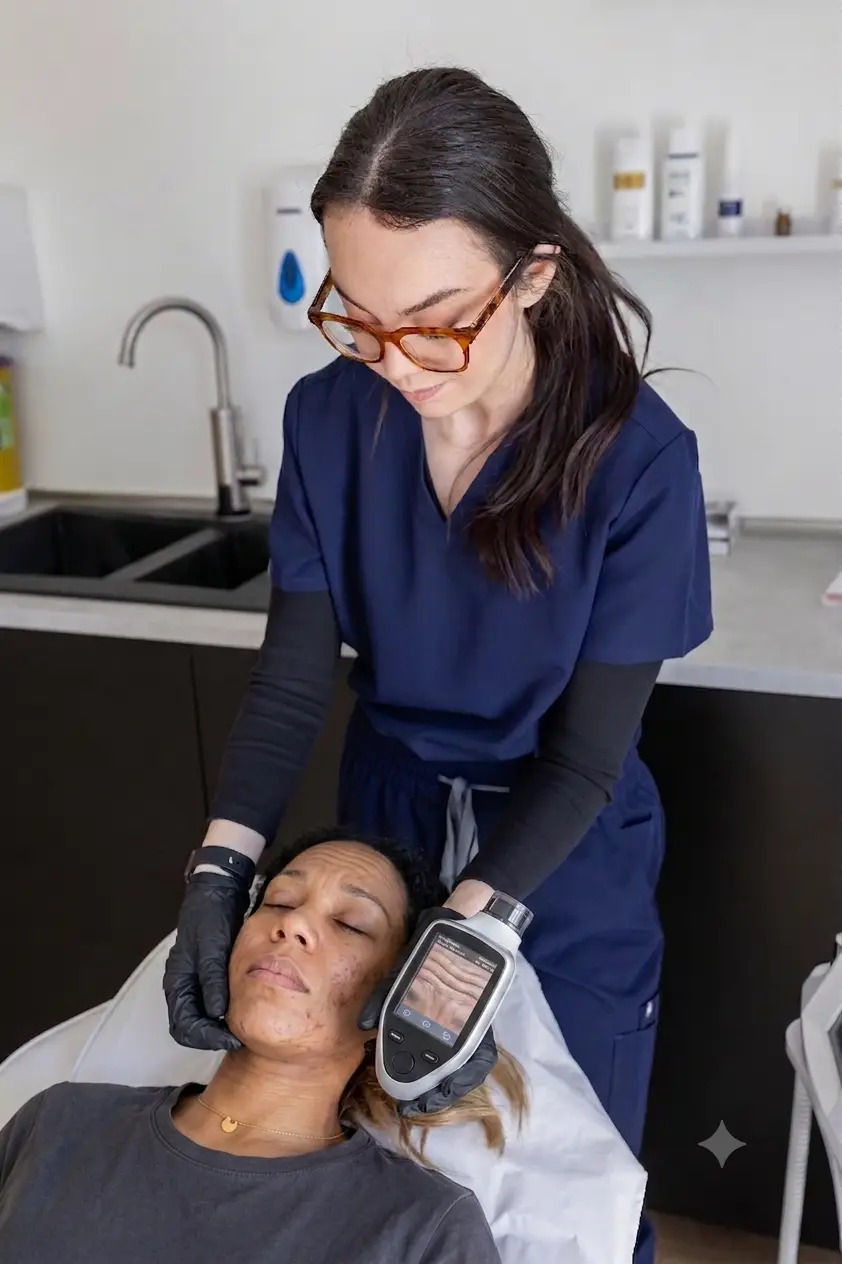
In clinic, we control needle depth for each area of the face, use sterile single-use cartridges, and assess your skin first. Depth matters: too shallow and you get little collagen response; too deep or poorly controlled and you risk damage. Home rollers simply can’t offer that precision.
What to expect
Treatment is done with a numbing cream for comfort. Afterwards, skin usually looks pink, like mild sunburn, for a day or two, sometimes with a little dryness as it settles.
Most people benefit from a course, typically several sessions spaced around four to six weeks apart. Results build over the months that follow.
Microneedling and menopausal skin
Because microneedling relies on your skin’s own repair response, it’s a natural fit for skin where collagen production has slowed. It also pairs well with other regenerative treatments. We’ll look at how it compares to NeoGen in a future post.
Interested in microneedling? Book a consultation at our clinic in Hitchin, Hertfordshire to find out whether it’s the right fit for your skin.
This article is for general information and is not a substitute for personalised medical advice. Individual results vary, and all treatments begin with a consultation to check suitability.
The Collective Journal
Recent Posts.